










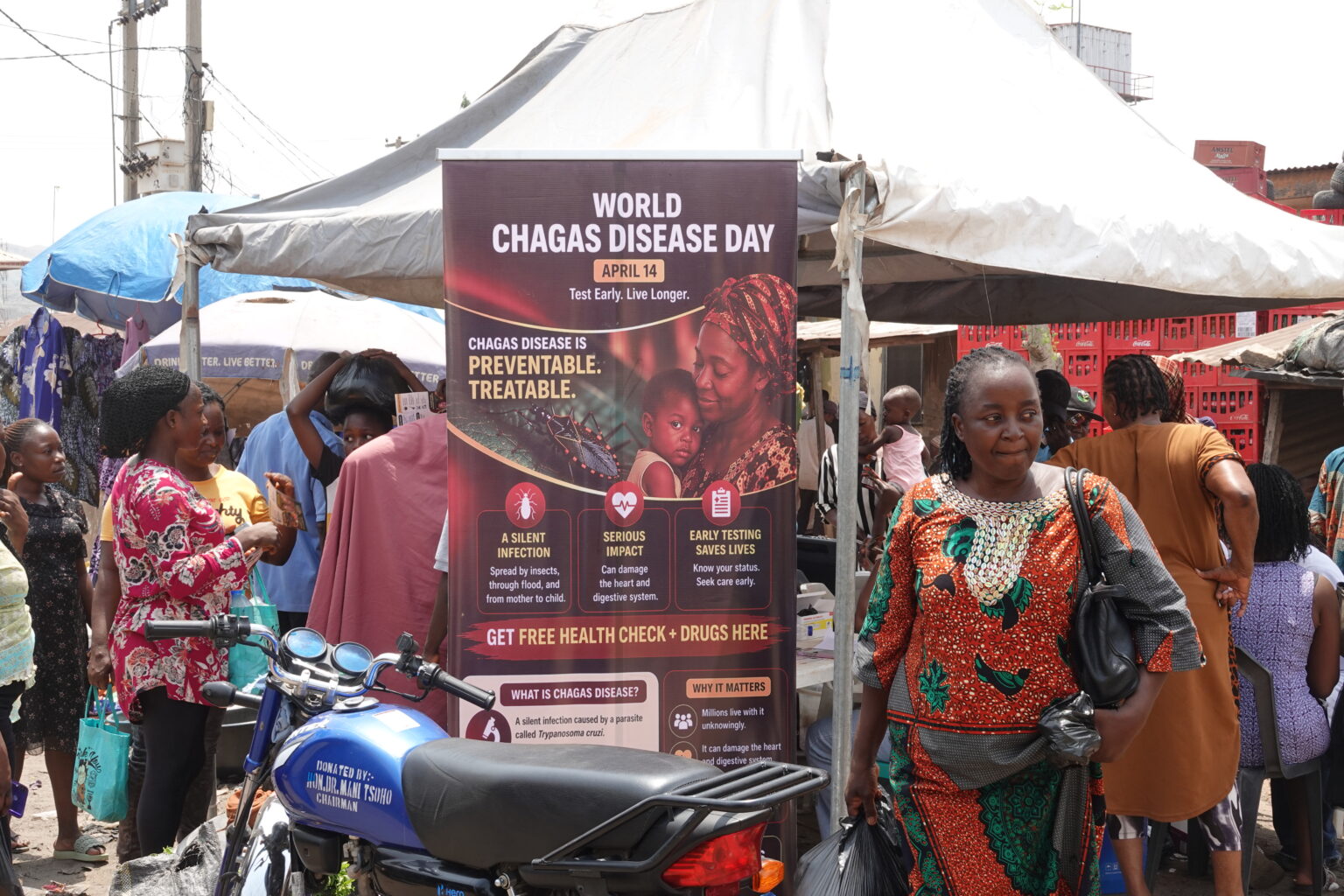
At Nyanya Market, one of Abuja’s busiest trading areas, a different kind of activity unfolded among the usual rush of buyers and sellers. Health workers moved from stall to stall, speaking with traders and residents about a disease many had never heard of but one that can quietly affect the body for years.
Equitable Medicaid and Clinical Research marked World Chagas Disease Day with an outreach focused on raising awareness and offering basic health services to women in the community.
Chagas disease is a parasitic infection caused by Trypanosoma cruzi. It is known for its slow progression, with many infected people showing no clear symptoms in the early stage. Without treatment, it can later lead to serious complications, including heart damage and digestive disorders.


Health workers explained that the lack of visible signs is part of what makes the disease dangerous. Many people may carry the infection for years without knowing, only discovering it when complications arise.
The World Health Organization set aside April 14 to draw attention to the condition, noting that many affected individuals live in low-income communities where access to healthcare is limited and awareness remains low.
The Nyanya Market outreach focused on women, who play a central role in family health and daily care. More than 500 women took part in the session, listening as health educators shared simple explanations about the disease, how it spreads, and what signs to watch for.
For many participants, the information was new. Questions followed the discussions, with traders seeking clarity on how to protect themselves and their families.
Organizers said reaching women in busy community spaces such as markets helps spread health information faster, as many of them share what they learn with others at home and within their neighborhoods.
Alongside the education sessions, the outreach included free medical tests aimed at meeting immediate health needs.
A total of 98 women were screened for blood sugar levels, while 116 individuals were tested for malaria. The testing areas drew steady attention, with participants eager to know their health status.
Those who tested positive for malaria were given a full dose of medication at the site. Health workers said providing treatment immediately helps reduce delays that can occur when patients are asked to visit health facilities later.
To support the awareness effort, organizers distributed 500 printed flyers. The materials outlined early signs of Chagas disease, how it spreads, and simple steps people can take to stay safe.
For many in attendance, the outreach offered both knowledge and direct care in a setting they trust and visit daily. Organizers say efforts like this remain important in closing the gap between health information and access to services in underserved communities.