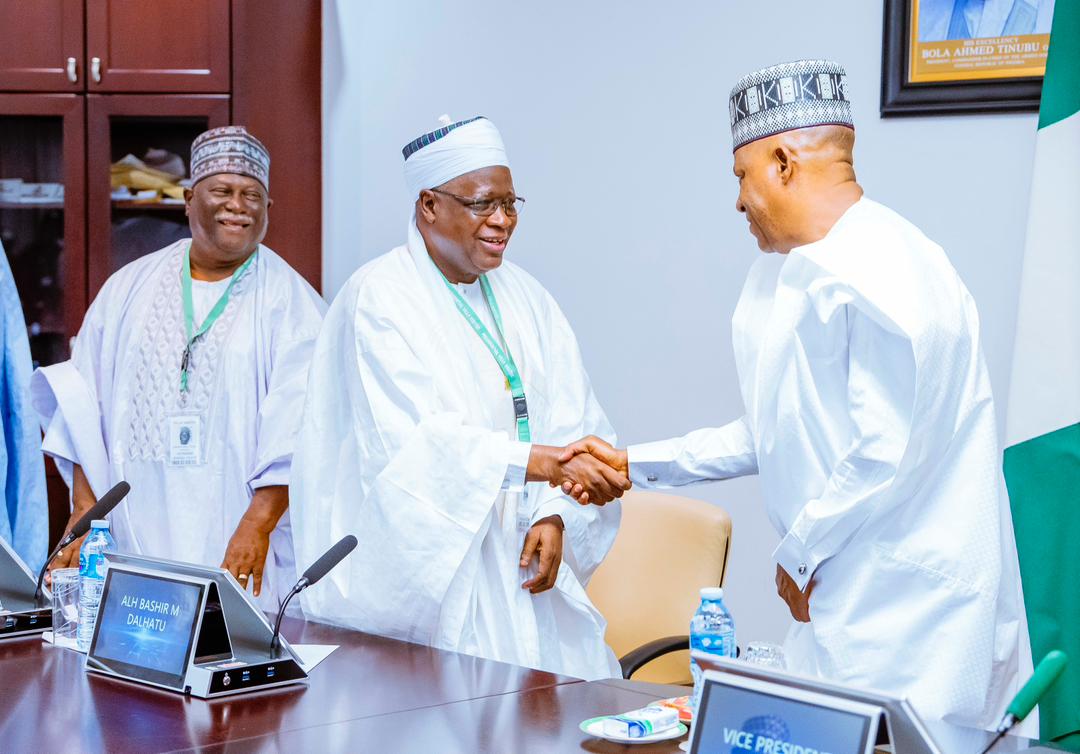






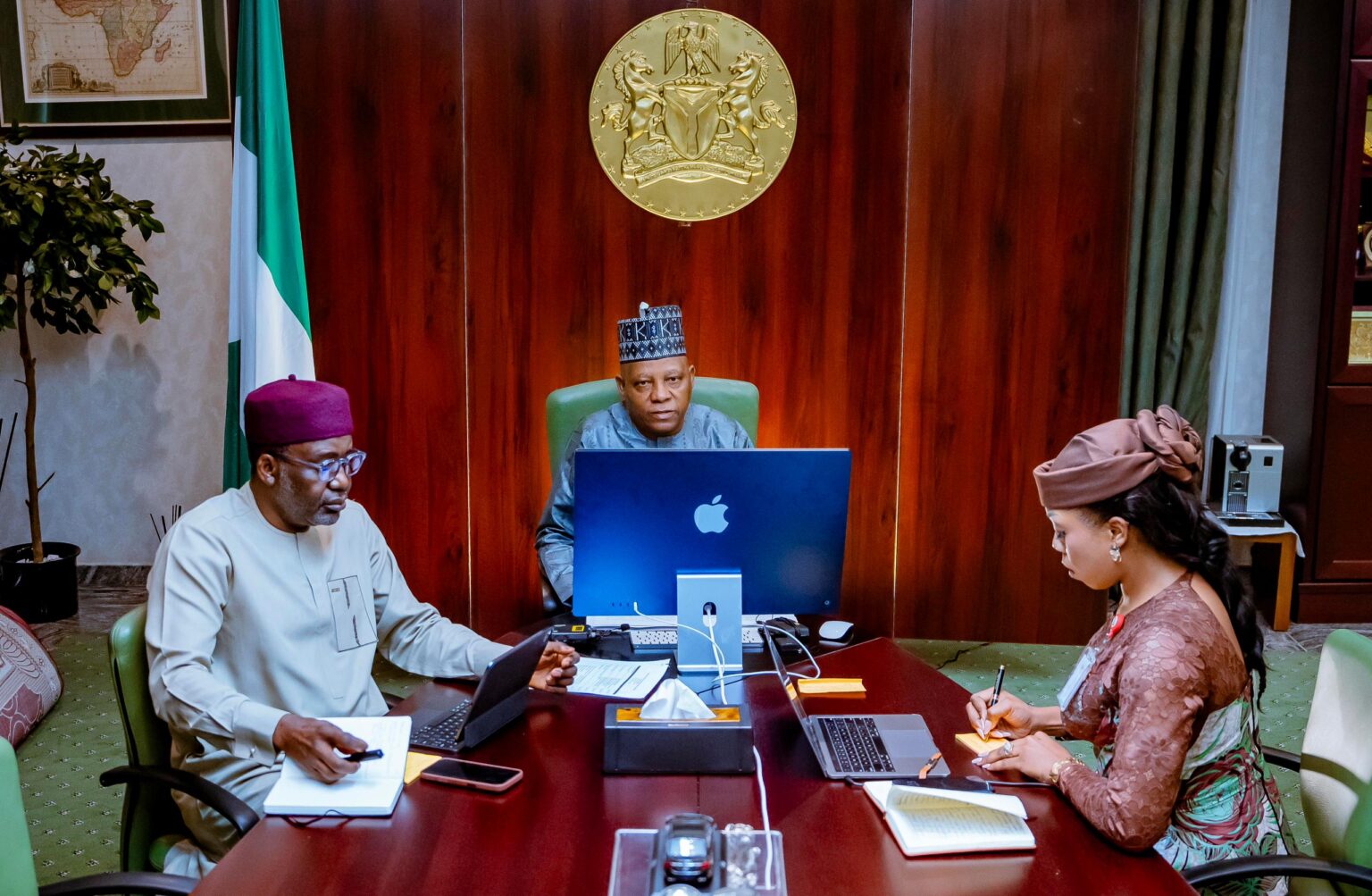
The National Council on Nutrition (NCN), chaired by Vice President Kashim Shettima, has established a Nutrition Financing Subcommittee to design a funding structure for Nigeria’s nutrition programmes.
The decision was reached on Thursday during a virtual meeting of the Council. The newly formed subcommittee has been given 30 days to produce a financing roadmap for review by the National Council on Nutrition and the National Economic Council before adoption.
Vice President Shettima said the government must protect funds meant for nutrition programmes and close the gap between policy promises and improvements in the lives of Nigerians. He also called for urgent progress on the proposed National Nutrition Bill.

Members of the subcommittee include the Coordinating Minister of Health and Social Welfare, Prof. Muhammad Ali Pate, who will serve as chairman. Other members are the Ministers of Education, Water Resources, Women Affairs, and Science and Technology, as well as the Deputy Chief of Staff to the President and the Senior Special Assistant to the President on Public Health. The Ministry of Budget and Economic Planning will act as the secretariat.
The Vice President also directed that development partners and private investors be included in the committee’s work. Among those expected to participate is the Aliko Dangote Foundation.
Speaking after the meeting, Shettima said the Council had agreed that Nigeria requires a strong legal and institutional structure to guide coordination, financing, and accountability across sectors. He added that the National Nutrition Bill should be pursued without delay.
According to him, an Ad hoc Technical Committee will continue its work and will be co chaired by the Federal Ministry of Budget and Economic Planning and the Federal Ministry of Agriculture and Food Security.
The Council also agreed that funds allocated to nutrition related programmes must be released on time and used for their intended purpose. Ministries, departments and agencies were urged to carry out approved programmes without delay.
Shettima also highlighted the role of the Accelerating Nutrition Results in Nigeria (ANRiN) 2.0 project in addressing service gaps in states with high malnutrition rates. He encouraged state governors to speed up actions required for the project so that available resources can be used effectively.
He said progress in nutrition cannot depend on federal actions alone, noting that results are determined in homes and communities. For that reason, he called for stronger participation from state governments, local authorities, community leaders and frontline workers.
The Council also stressed the importance of women in improving nutrition across the country. According to the Vice President, women remain central to household nutrition, childcare and food systems, and their participation must be reflected in planning and decision making.
Shettima added that the real issue before the Council is how nutrition programmes are funded and managed. He said there must be clear records on how funds are budgeted, released and tracked across government institutions and states.
He noted that budgeting without the release of funds does not support programme delivery and urged public institutions to account for how funds are used.
During the meeting, the Council received updates on the Food and Nutrition Security Preparedness Plan, the Nutrition 774 programme, and progress on the National Nutrition Bill.
Representatives of state governments, development partners and civil society organisations also expressed support for the country’s nutrition programmes.
Kwara State Governor Abdulrahman AbdulRazaq, the Chairman of the Board of the Nutrition Society of Nigeria Muhammad Sanusi II, and representatives from organisations including the Aliko Dangote Foundation and UNICEF restated their support for nutrition efforts across Nigeria.
The Council was also informed that State Councils on Nutrition have been inaugurated in nine states: Abia, Adamawa, Borno, Cross River, Jigawa, Plateau, Rivers, Yobe and Zamfara, with more states expected to follow.